
The plant based burger trend is quickly turning into a movement among the next generation. In a world where millennial workers are trying to make a difference, young people are protesting climate change and everyone is looking to follow a healthier lifestyle- plant based burgers seem to be the perfect fit. However, are plant based burgers truly the answer to promoting health and saving the planet?
The 3 Wave Evolution of the ‘veggie’ burger
Veggie burgers have had ties to health and wellness since 1916, when the Battle Creek Sanitorium was opened by the Kellogg brothers. The focus of the sanitorium was for patients to take part in a vegetarian diet, along with daily exercise to focus on their overall wellbeing. It was during this time that the first mock meat burger was created out of nuts and gluten- and was wildly successful, making over one million dollars in annual sales.
The second wave of veggie burger innovation came in the 1970s. It was during this time that veggie burgers made the transition from the canned goods aisle to the freezer section. This gave way to a fresher alternative to the meatless burger.
These burgers were still being marketed to the vegetarian demographic as a great way to enjoy a Sunday grill out. That is up until recently when plant based burgers began to take on a more ‘meaty’ appearance in taste and texture. While some even mimic the traditional beef burger by ‘bleeding’.
Marketing a new trend to the masses
Manufacturers of the most recent wave of plant based meats have found ways to successfully imitate the traditional, juicy grilled burger. And in doing so they have been able to tap into a whole new demographic of customers. Their new marketing is focused on millennials who embrace core values of creating a better world by reducing their impact on climate change, purchasing sustainable and ethically sourced products and living a healthier lifestyle.
Even though many vegetarians and vegans choose a plant based diet based on similar core values, they are not the target audience when it comes to the new generation of veggie burgers. Instead, companies are targeting a new sector of the market called flexitarians. According to CNBC, “That’s the name used to describe the growing number of consumers who are trying to reduce how much meat they are eating, usually for health or environmental reasons.”
Beyond the Freezer Section

In addition, you’ll find product placement has expanded beyond the freezer section to the fast food industry. Millennials are becoming more and more focused on making health conscious choices when it comes to their diets, leading to fast food restaurants openly embracing these plant based burgers. By advertising a healthy alternative to the traditional burger, fast food companies have found a way to remain relevant among the new generation.
And now companies, such as Impossible Foods and Beyond Meats, are being placed right next to their beef competitors in grocery stores. Which means, yet again, consumers have an even fresher option when shopping for plant based products.
How They’re Made
Impossible Foods and Beyond Meats are the biggest players in the meatless burger game right now, and have used their unique ingredients and formulas to set themselves apart from the pack. From creating veggie burgers that bleed to ones with a smokey rich taste, these companies have found a way to compete center stage with their beefy competitors.
Select Ingredients
Food manufacturers have come a long way since the days of Kellogg. No more are the traditional methods of mixing and blending to create the perfect veggie burger. Instead, food scientists have created unique formulas that involve protein extraction, meticulous measuring, and closely controlled environments.
It is with these unique formulas that they have been able to create a veggie burger that is almost identical in taste and texture to the traditional burger.
Impossible Foods
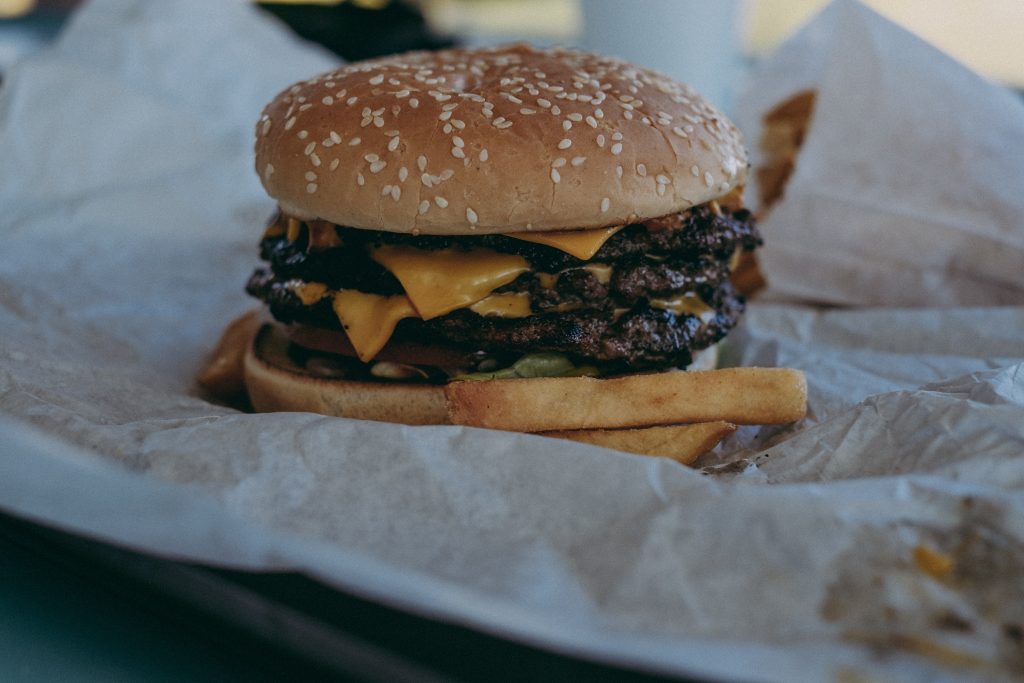
Impossible Foods has set out to make the impossible possible by finding sustainable methods to feed the planet using a reduced amount of resources. They are the company behind the heavily advertised Impossible Whopper and are known to have the ‘bleeding’ veggie burger. In addition, they have also been able to create a meatless product that is almost indistinguishable from a traditional meat burger in both taste and texture.
The key ingredient to their success is heme, a “molecule that gives meat its bloody taste when raw and creates the intense, meaty flavors and aromas when it’s cooked.” Food scientists are able to create this molecule by extracting DNA from GMO soy plants, mixing it with an engineered yeast, and then allowing it to ferment.
Most recently, Impossible Foods has created a plant based alternative to pork as well. Looking to fulfill their goal of replacing the animal food system by 2035. According to Impossible Foods, their new pork product allows, “consumers around the world who love dishes that are traditionally made with pork, will finally be able to serve to their families without the catastrophic environmental impact.”
Beyond Meats
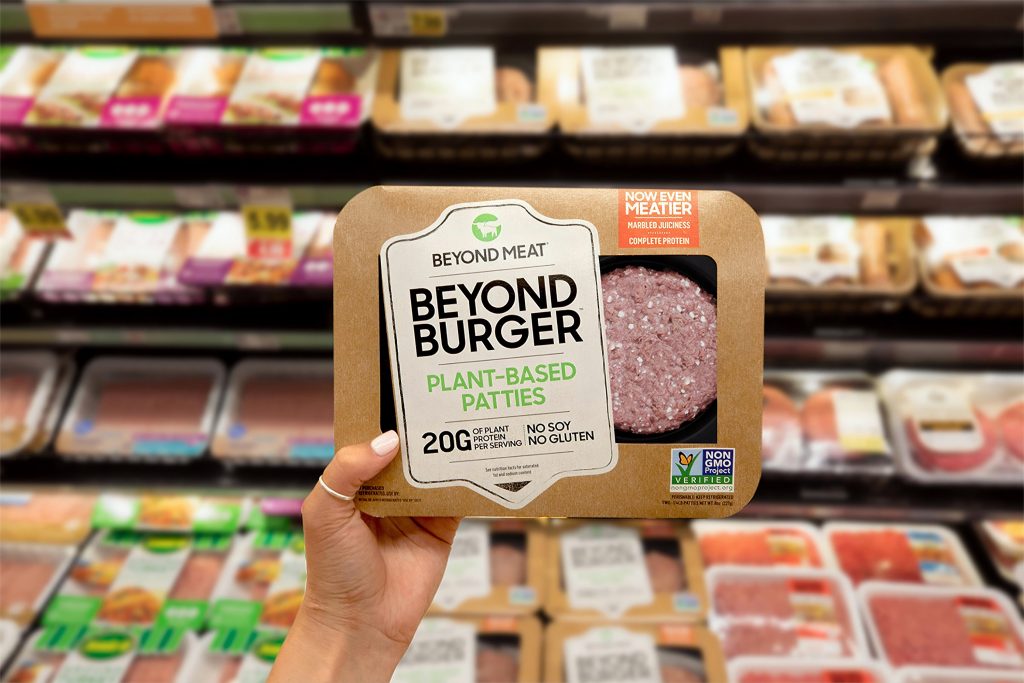
Beyond Meats claims that the “Beyond Burger is the world’s first plant-based burger that looks, cooks, and satisfies like beef.” The company has also made a name for themselves within the fast food industry by partnering with brands such as Dunkin Donuts and Carl’s Jr.
Beyond Burgers are more similar to their veggie ancestors, containing ingredients such as peas, mung beans, and beet extract. They are also free of GMOs, soy and gluten. However, they do warn that those with severe allergies to legumes, such as peanuts, should be cautious when introducing pea protein into their diets.
In addition to burgers, Beyond Meats also offers Beyond Sausage and Beyond Beef ground meat- both of which can be found in the meat section in a number of grocery stores.
Are they really healthier for you?
Whether you are a vegan or a carnivore, many will agree that the healthiest diet is one consisting of whole foods with minimally- if any- processed ingredients. This begs the question, are plant based burgers with a laundry list of ingredients really healthier for you than their one ingredient competitors.
For example, Beyond Burgers have 18 ingredients while the Impossible Burger has 21. That’s quite a few more than the one ingredient in a traditional burger- beef. Even though these ingredients are sourced from plants, they are still considered processed and are the burgers are not made from whole food plant sources- which are healthier for you.
Rachel Fine, a registered dietitian nutritionist and owner of To the Pointe Nutrition in New York City, explained to HuffPost, “It’s important to keep in mind that things like processed soy and other kinds of processed foods should be eaten in moderation,” she said. “So, it wouldn’t be something that I’d advise people to eat regularly, but certainly for people who are trying to cut down on red meat and that are vegetarian or vegans.”
In addition, it’s important that those with allergies such as soy and peanuts are aware of the ingredients in these products since many of them are made with legume or soy proteins.
Nutrition Facts

When it comes to the plant based burgers nutritional label we can draw many comparisons between them and traditional beef burgers.
Since plant based burgers are also made with fats, such as coconut oil, the amount of saturated fat is pretty comparable between them. According to HuffPost, “The addition of coconut oil gives Beyond and Impossible burgers comparable saturated fat levels to beef: Beyond has 6 grams, Impossible 8 grams and beef 7.6 grams.”
When comparing a Five Guys beef patty, 50g of sodium, to the Beyond Burger, 390g, and the Impossible Burger, 370g, you can see that there’s quite a significant difference in sodium levels. However, this is normal considering that most processed foods are known to have higher amounts of sodium in them. Even traditional veggie burgers have large amounts of sodium, so this isn’t anything new when it comes to the plant based world.
The Verdict
It’s clear that plant based burgers are better for the climate and appeal to the millennial masses. However, as with any packaged food, it’s important that you are consuming plant based burgers in moderation and not relying on them as your main source of protein.
The new generation of plant based meats are looking to change the way society looks at animal consumption as a whole. With ingenuity and innovation, it’s clear that they are paving a path promised to bring us even more meatless options in the future.
About the Author

Annette writes over at Coffee, Chaos & Dry Shampoo for scrunchy moms who are looking for ways to live a healthy, eco-friendly life backed by science, without breaking the bank or sacrificing their time and convenience to do so. While we’d all love to have a natural birth or eat all organic, scrunchy moms realize pain sucks and our budgets matter. If this sounds like you then welcome to the scrunchy squad, where we take the parenting advice we like and we leave what we don’t behind.
You can follow her at the following places: